Acquirer vs Issuer 2026 - What's the Difference?
Acquirer vs issuer explained: who each bank serves, how money flows between issuer, acquirer and merchant, who pays fees, and how to choose an acquiring bank.
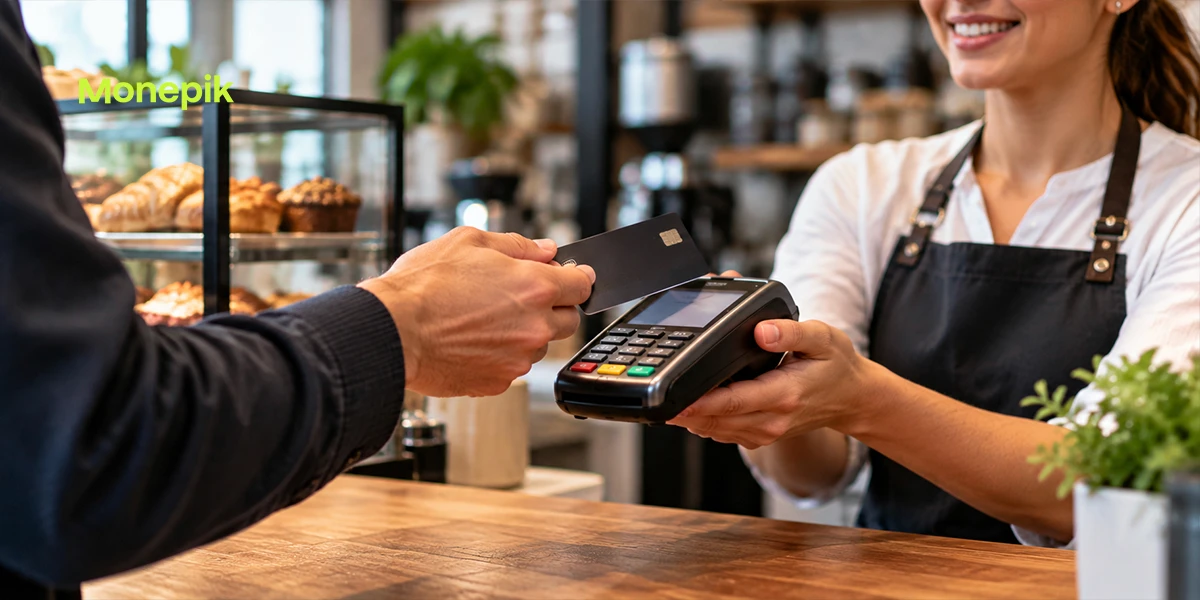
The issuer is the cardholder's bank. The acquirer is the merchant's bank. The issuing bank gives a customer their card and approves or declines each purchase.
The acquiring bank (the acquirer) lets a business accept that card, then collects the money from the issuer and settles it into the merchant's account.
Every card payment needs both. When you look at issuer vs acquirer, you are really looking at the two sides of one transaction: the buyer's side and the seller's side, connected by a card network such as Visa or Mastercard.
If you run an online business, the acquirer is the relationship you choose and negotiate. The issuer is chosen by your customer, and you never deal with it directly.
That's why, for merchants, getting merchant acquiring right matters far more than knowing which banks your customers use.
What is an issuer (issuing bank)?

An issuer, or issuing bank, is the financial institution that provides a payment card to a consumer or business and backs that card with credit or funds. Think of the bank logo on the front of your card: that's the issuer.
The issuer's job is to protect its cardholder and its own money. Its core responsibilities are:
Issuing cards and accounts. Debit, credit, prepaid and virtual cards, under a Visa, Mastercard, Amex or local scheme brand.
Authorising transactions. It checks available funds or credit, fraud signals and 3-D Secure results, then approves or declines in milliseconds.
Paying out on approved purchases. It sends funds to the acquirer through the card network during settlement.
Billing the cardholder. It posts the charge to the statement and collects repayment.
Handling disputes from the cardholder's side. When a customer says "I didn't buy this", the issuer starts the chargeback.
Earning interchange. The issuer receives the largest share of every card fee, which funds rewards, fraud cover and credit risk.
Modern issuers include high-street banks, neobanks and fintechs using issuing-as-a-service platforms. Whatever the brand, an issuer always works for the person paying.
What is an acquirer (acquiring bank)?

An acquirer, or acquiring bank, is a licensed financial institution that enables a merchant to accept card payments and settles those payments into the merchant's bank account.
It is a member of the card schemes, so it can send transactions into Visa and Mastercard on the merchant's behalf.
The acquirer in payment processing
In payment processing, the acquirer sits between the merchant and the card network. Its responsibilities are:
Underwriting and onboarding merchants. It runs KYB checks, reviews the business model, website, processing history and chargeback ratios, then decides whether to open a merchant account (MID).
Routing authorisations. It passes each payment request from the merchant's gateway to the card network and the answer back.
Settling funds. It collects money from issuers and pays the merchant, usually T+1 to T+7, minus fees.
Carrying merchant risk. If a merchant goes bust with unpaid refunds or chargebacks, the acquirer is liable to the schemes. That's why it may hold a rolling reserve.
Enforcing scheme rules. It monitors fraud and dispute levels and enrols merchants in programmes such as Visa VAMP or Mastercard ECM when thresholds are breached.
Managing chargebacks for the merchant. It forwards disputes and the merchant's evidence (representment) back to the issuer.
Acquirer vs processor vs PSP
These terms get blurred. The acquirer holds the scheme licence and the financial liability. A payment processor provides the technical rails that move the transaction data, sometimes owned by the acquirer, sometimes not.
A PSP or payment facilitator (such as Stripe or Adyen's platform model) onboards many merchants under its own acquiring relationship.
For mainstream businesses, a PSP is often enough. High-risk or high-volume merchants usually need a direct acquiring relationship with their own MID.
Issuer vs acquirer: side-by-side comparison
The simplest way to compare an acquiring bank vs issuing bank is to ask who each one works for and what risk it carries.
Issuing bank (issuer) | Acquiring bank (acquirer) | |
Works for | The cardholder (buyer) | The merchant (seller) |
Main role | Issues cards, approves or declines payments | Lets merchants accept cards, settles funds |
Relationship | Customer chooses it | Merchant applies to it and is underwritten |
Money direction | Pays out funds for approved purchases | Receives funds and pays the merchant |
Key risk | Cardholder credit and fraud risk | Merchant risk: chargebacks, fraud, insolvency |
Fee it earns | Interchange (largest share) | Acquirer markup / merchant discount rate |
In a chargeback | Raises the dispute for the cardholder | Defends or passes the dispute to the merchant |
Examples | Retail banks, neobanks, card-issuing fintechs | Merchant acquirers, acquiring banks, licensed EMIs |
One bank can be both: a large bank may issue cards to consumers and also run a merchant acquiring business. Even then, the two roles stay separate in every transaction.
Issuer vs acquirer vs merchant: how a card payment flows

A card payment involves four parties: the cardholder, the merchant, the acquirer and the issuer, connected by the card network.
This is called the four-party model, and it explains how the issuer and acquirer work together.
Cardholder: the customer paying with a card.
Merchant: the business selling goods or services.
Acquirer: the merchant's bank, which accepts and settles the payment.
Issuer: the cardholder's bank, which approves and funds the payment.
Card network (scheme): Visa, Mastercard, etc., which sets the rules and routes messages between acquirer and issuer.
Amex and Discover often act as issuer, network and acquirer at once. That's the three-party model.
Step 1: Authorisation (about 1–3 seconds)
The customer enters card details at checkout.
The merchant's gateway sends the request to the acquirer.
The acquirer forwards it through the card network to the issuer.
The issuer checks funds, fraud rules and 3-D Secure, then approves or declines.
The answer travels back the same way, and the merchant confirms the order.
Step 2: Clearing
At the end of the day, the merchant submits its approved transactions in a batch. The acquirer sends them through the network so the issuer can post them to cardholder accounts.
Step 3: Settlement (usually T+1 to T+3, longer for high-risk)
The issuer transfers funds to the acquirer via the network, minus interchange. The acquirer deducts its own fees and any reserve, then pays the merchant.
So in issuer vs acquirer vs merchant terms: the issuer pays, the acquirer collects, and the merchant receives what's left after fees.
Fees and chargebacks: where issuer and acquirer collide
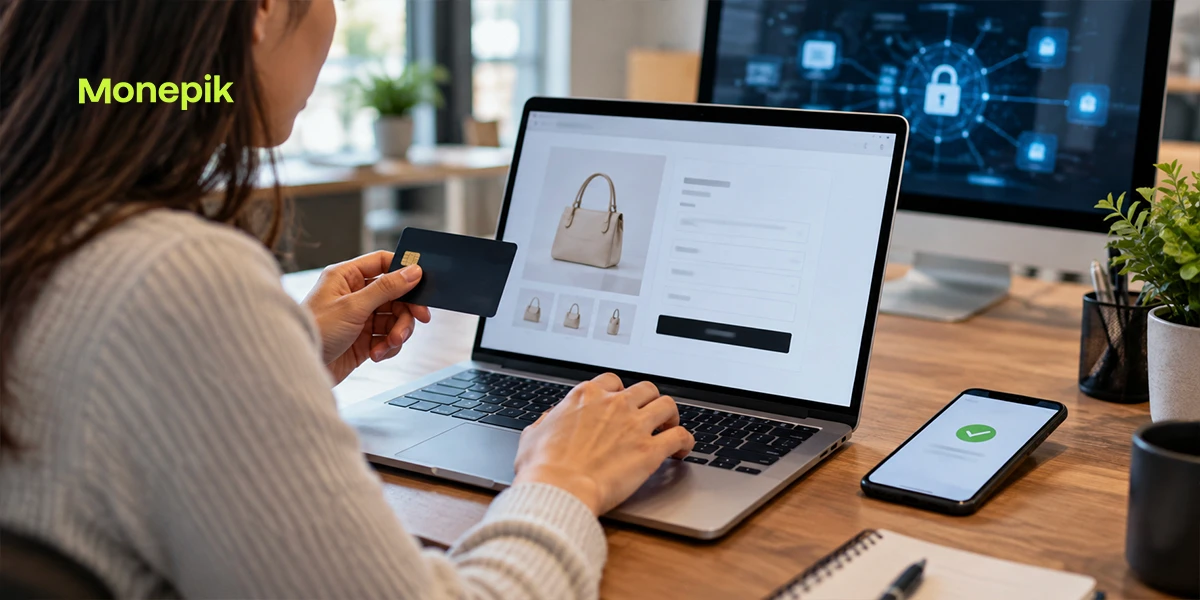
The merchant pays for every card transaction, and that fee is split between the issuer, the network and the acquirer. Disputes run the same path in reverse.
Who gets paid what
Fee component | Goes to | Who sets it |
Interchange | Issuer | Card scheme (capped in the EU/UK for consumer cards) |
Scheme fees | Card network | Card scheme |
Acquirer markup | Acquirer (and processor/PSP) | Negotiable with your acquirer |
Interchange and scheme fees are largely fixed. The acquirer markup, reserves, settlement timing and chargeback fees are where merchants have room to negotiate. That's also where high-risk pricing varies most between acquirers.
How a chargeback moves between issuer and acquirer
The cardholder disputes a charge with their issuer.
The issuer raises a chargeback through the network and pulls the funds back from the acquirer.
The acquirer debits the merchant and charges a chargeback fee.
The merchant can submit evidence; the acquirer passes it to the issuer (representment).
The issuer decides. Unresolved cases can go to pre-arbitration and scheme arbitration.
The issuer is on the cardholder's side; the acquirer is on yours, but only up to a point. If your dispute ratio climbs above scheme thresholds, the acquirer may raise your reserve, enrol you in a monitoring programme, or close your account.
Merchant acquiring for high-risk businesses
For high-risk merchants, the acquirer, not the issuer, decides whether you can take card payments at all. Issuers decide transaction by transaction; acquirers decide whether your business gets a merchant account in the first place.
Acquirers classify businesses by risk using MCC codes, chargeback history, regulatory exposure and fraud patterns.
Verticals such as iGaming, crypto, FX/CFD, adult, nutraceuticals, CBD, travel and subscription models are typically labelled high-risk. Many mainstream PSPs exclude them entirely or close accounts once volume grows.
Why high-risk merchants struggle with acquiring
Limited appetite. Only a small share of acquirers underwrite each vertical, and appetite shifts by jurisdiction and over time.
Higher costs. Expect higher markups, rolling reserves (often 5–10% held for around 180 days), and higher chargeback fees.
Issuer declines. Some issuers block certain MCCs (for example gambling or crypto purchases), so a local acquirer with good issuer relationships can lift approval rates.
Single point of failure. One acquirer closing your MID can stop revenue overnight.
How to choose an acquirer: a checklist
Vertical and licence fit. Does it actively underwrite your industry and your target markets?
Geography. Does it offer local acquiring in your main customer regions? Local acquiring usually means higher approval rates and lower cross-border fees.
Approval rates. Ask for realistic authorisation rates for your MCC and card mix.
Total cost. Compare markup, reserve terms, settlement time and chargeback fees, not just the headline rate.
Risk tooling. 3-D Secure, fraud screening, and chargeback alerts (Ethoca, Verifi/RDR) keep your ratios inside scheme limits.
Settlement options. Currencies, payout frequency, and whether it can settle to the accounts you already hold.
Redundancy. Plan for at least two acquirers with cascading or smart routing, so a decline or MID issue never stops sales.
How Monepik helps you find the right acquirer
Monepik connects high-risk and fast-scaling merchants with the right acquiring banks, so you don't have to pitch dozens of acquirers one by one.
Since 2018, we've matched 2,700+ merchants with a network of 350+ banks, acquirers and PSPs across global regions.
What that means in practice:
Acquirers that want your vertical. We know which acquirers are underwriting iGaming, crypto, FX/CFD, adult, travel, pharma and CBD right now, and in which jurisdictions.
Better-prepared applications. We help you package your KYB, processing history and risk controls so underwriters say yes faster.
Multi-acquirer setups. We help you add backup acquirers and local acquiring for higher approval rates and no single point of failure.
More than cards. Banking, APMs, fiat and crypto flows, and multi-currency settlement, all from one partner.
We never publish our clients' names. Your payment setup stays your competitive advantage.
Need an acquirer for your business? Talk to a Monepik payments consultant or message us on WhatsApp or Telegram.
Frequently Asked Questions
What is the difference between an acquirer and an issuer?
An issuer is the bank that gives a customer their card and approves their payments. An acquirer is the bank that lets a merchant accept card payments and settles the money into the merchant's account. The issuer represents the buyer; the acquirer represents the seller.
What is an acquirer in payment processing?
An acquirer is a card-scheme member that processes card payments for merchants. It routes authorisation requests to the card network, collects funds from issuers, pays merchants, and takes on the financial risk of the merchants it onboards.
Is an acquiring bank the same as a merchant bank?
In card payments, yes. "Acquiring bank", "merchant acquirer" and "merchant bank" usually mean the same thing: the institution that provides a merchant account. In investment banking, "merchant bank" has a different meaning.
Is Visa an issuer or an acquirer?
Neither. Visa and Mastercard are card networks. They connect issuers and acquirers and set the rules, but they don't issue cards or sign up merchants themselves. American Express is different: it often acts as issuer, network and acquirer.
Can a bank be both an issuer and an acquirer?
Yes. Many large banks issue cards to consumers and run a merchant acquiring business. In any single transaction, though, the issuing role and the acquiring role are separate.
Who approves a card transaction, the issuer or the acquirer?
The issuer approves or declines each transaction. The acquirer decides whether to accept the merchant as a client and can block transactions that break its risk rules, but the final yes or no on a payment comes from the issuer.
Who pays interchange fees?
The merchant pays them, indirectly. Interchange is deducted from the transaction and paid to the issuer, and the acquirer passes the cost to the merchant inside its pricing.
Who is responsible for chargebacks, the issuer or the acquirer?
The issuer raises the chargeback on behalf of the cardholder. The acquirer is liable to the card scheme for the merchant and debits the merchant's account, so the cost ultimately falls on the merchant unless the dispute is won.
What is merchant acquiring?
Merchant acquiring is the service of enabling businesses to accept card payments: underwriting the merchant, providing a merchant account (MID), processing transactions and settling funds. It's what an acquirer sells.
How do high-risk merchants get an acquiring bank?
High-risk merchants need an acquirer that actively underwrites their vertical and markets, which often means specialist or offshore acquirers. Working with a payments introducer like Monepik shortens the search by matching you with acquirers already approving businesses like yours.
Ready to Scale Global Payments?
Build reliable payment infrastructure for global markets. Manage, expand, and optimize your payments.