Merchant Account UK 2026 - Benefits, Fees & How It Works
Learn how a merchant account in the UK works, typical fees, approval requirements, high-risk options, and what to look for when choosing a provider.

If your business accepts debit or credit card payments in the UK, a merchant account is one of the key parts of the payment process.
But merchant accounts are often confused with payment gateways, processors, and normal business bank accounts.
They are not the same thing.
The right high risk merchant account can affect your processing costs, settlement times, approval rates, and ability to scale into new markets.
This guide explains how a merchant account works, what it costs, and what UK businesses should consider before choosing a provider.
What Is a Merchant Account UK?
A merchant account is part of the infrastructure that allows a business to accept card payments.
It sits between the payment processing system and the merchant's normal business bank account.
When a customer pays by card, the funds do not move directly into the merchant's bank account.
The transaction normally goes through:
Customer → Payment Gateway → Payment Processor / Acquirer → Card Network →Issuing Bank→ Approval → Settlement to Merchant
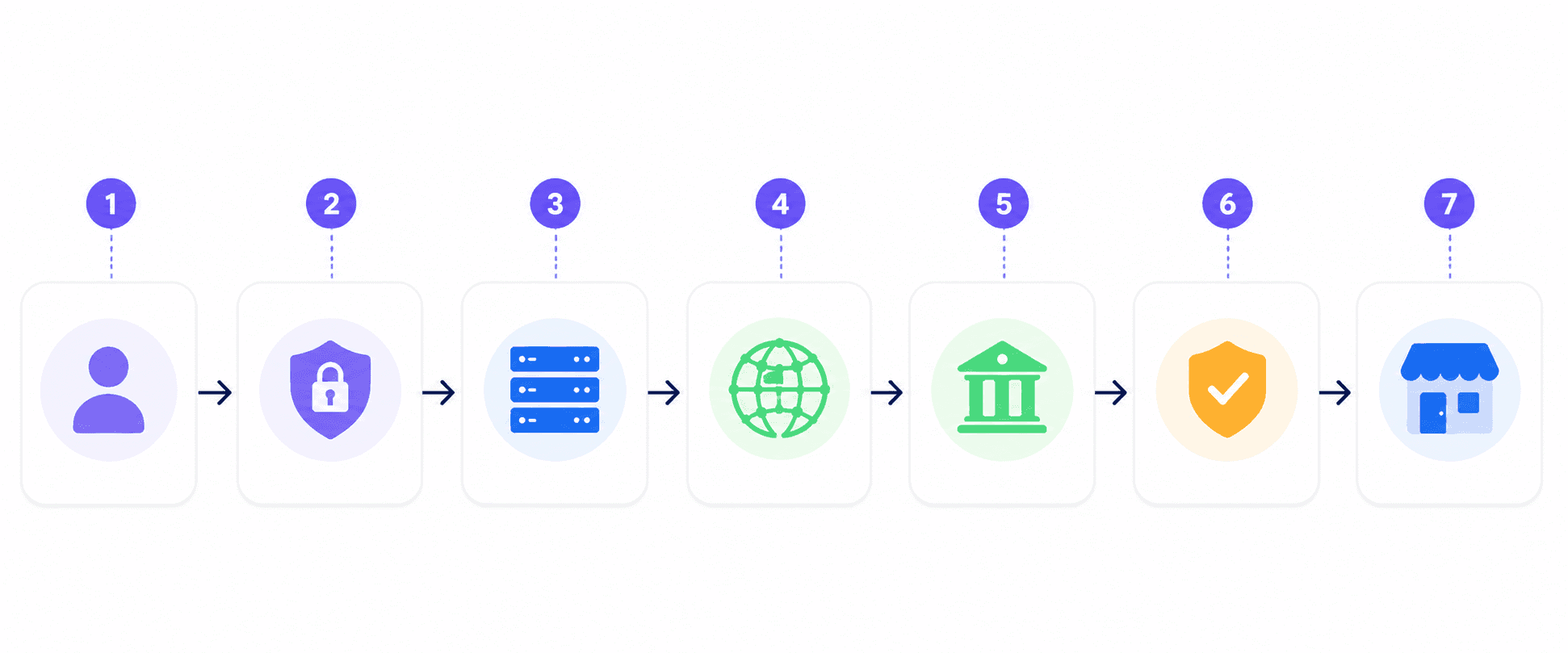
The merchant account forms part of the acquiring and settlement process.
Some modern payment providers bundle this functionality into one platform, so the merchant may not see a separate account.
Do I Need a Merchant Account UK?
If your business wants to accept card payments, merchant account functionality needs to exist somewhere in your payment setup.
However, you do not always need to open a traditional merchant account separately.
Many payment processing companies in the UK combine:
Merchant acquiring
Payment gateway
Card processing
Settlement
Fraud tools
Reporting
For smaller businesses, this can simplify setup.
Larger, international, or high-risk businesses may need a dedicated acquiring relationship instead.
What Is an Internet Merchant Account UK?

An internet merchant account is designed for businesses accepting payments online.
This can include:
E-commerce websites
Mobile apps
Online marketplaces
Subscription businesses
Payment links
Digital platforms
Online merchants usually need more than basic card processing.
Their payment setup may also include:
3D Secure
Fraud screening
Tokenisation
Recurring billing
Chargeback tools
Multi-currency processing
The right setup depends on the business model and the markets being served.
Merchant Account vs Payment Gateway: What Is the Difference?
These two terms are often used together, but they perform different functions.
A payment gateway securely captures and sends payment information into the processing network.
A merchant account forms part of the acquiring setup that allows the merchant to receive card payments.
In simple terms:
Gateway = sends the payment data
Merchant account = supports receiving and settling the payment
Many providers bundle both services, which is why merchants may experience them as one product.
How Much Does a Merchant Account Cost UK?

There is no single merchant account price in the UK.
Fees depend on the provider, business model, volume, and risk profile.
Common costs can include:
Transaction fees
Monthly account fees
Gateway fees
Chargeback fees
International card fees
Currency conversion fees
Terminal costs
Setup fees
Pricing can also depend on:
Monthly processing volume
Average transaction value
Industry
Countries served
Chargeback history
Card types
Settlement requirements
A high-risk merchant may also face rolling reserves or longer settlement periods.
The headline transaction rate therefore does not always show the true cost of processing.
Best Merchant Account Providers UK: What Should You Compare?
There is no single best merchant account provider for every UK business.
The right provider depends on what you sell, where your customers are located, and how much payment risk the provider is prepared to accept.
Before choosing a provider, compare:
Industry support: Some providers do not support certain business models.
Geographic coverage: Check where the provider can actually acquire transactions.
Settlement terms: Understand when processed funds reach your bank account.
Total fees: Compare more than the advertised transaction rate.
Chargeback policies: Know the provider's monitoring and dispute requirements.
Currency support: International businesses may need multiple settlement currencies.
Processing limits: Make sure the setup can support future growth.
Technical integration: The provider should work with your existing payment stack.
The cheapest provider is not always the strongest provider.
High-Risk Merchant Account UK: Who Qualifies?

Some businesses receive additional scrutiny because they create greater financial, regulatory, or chargeback exposure for the acquirer.
Industries that may require specialist acquiring can include:
iGaming
Crypto
Trading
Travel
Subscription businesses
High-ticket e-commerce
However, industry alone does not determine whether a merchant is considered high risk.
Acquirers may also review:
Chargeback history
Processing volumes
Average transaction size
Countries served
Business history
Licensing
Refund exposure
Customer acquisition model
A high-risk merchant account UK provider may therefore request more documentation and apply stricter processing conditions.
How Long Does Merchant Account Approval Take UK?
Approval time depends on the provider and the complexity of the business.
A simple, low-risk business may complete onboarding relatively quickly.
Dedicated or high-risk merchant accounts usually involve more detailed underwriting.
Providers may request:
Company documents
Director identification
Bank statements
Processing statements
Website information
Expected volumes
Chargeback history
Regulatory licences
Incomplete documentation is one of the easiest ways to delay onboarding.
Merchants should prepare their information before submitting an application.
Can a Sole Trader Get a Merchant Account UK?
Yes.
A sole trader can generally apply for card processing services.
The provider may still verify:
Personal identity
Trading details
Business bank information
Products or services
Website
Expected payment volume
Overall risk profile
Being a sole trader does not automatically prevent a business from accepting card payments.
The Real Difference Between a Basic and Strong Merchant Setup
Getting approved for a merchant account is only the first step.
The stronger question is whether the payment setup can support the business long term.
A good setup should consider:
Approval rates
Settlement speed
Processing costs
Chargeback exposure
International expansion
Acquirer stability
Backup payment routes
This becomes especially important for high-volume and high-risk merchants.
A business may have a working gateway but still face problems if the acquiring relationship underneath it is weak.
How to Choose a Credit Card Processing Provider
Before signing with a credit card processing provider, ask:
Does the provider support my industry?
Which countries can it acquire in?
Are transactions processed locally or cross-border?
What are the complete processing costs?
What are the settlement terms?
Are rolling reserves required?
What are the chargeback thresholds?
Can the setup scale with my business?
These questions matter more than simply choosing the lowest advertised transaction fee.
The Bigger Picture: Your Merchant Account Is an Acquiring Decision
A merchant account may look like a simple payment product.
In reality, it is part of a much wider acquiring relationship.
For low-risk businesses, a bundled payment provider may provide everything needed.
For international, high-volume, or high-risk merchants, the decision becomes more complex.
The provider's risk appetite, geographic coverage, settlement terms, and processing capabilities can directly affect how reliably the business accepts payments.
This is why choosing a merchant account should not be based on price alone.
The real goal is to build a payment setup that can continue working as the business grows.
Looking for a UK merchant account or high-risk acquiring solution?
Talk to Monepik about building a payment setup suited to your business, markets, and processing requirements.
Ready to Scale Global Payments?
Build reliable payment infrastructure for global markets. Manage, expand, and optimize your payments.