Why Chargebacks Spike During the World Cup, Holidays & Major Events
Chargebacks surge during the World Cup, Black Friday, and holiday shopping seasons. Learn why it happens, which industries are hit hardest, and how merchants can prepare.
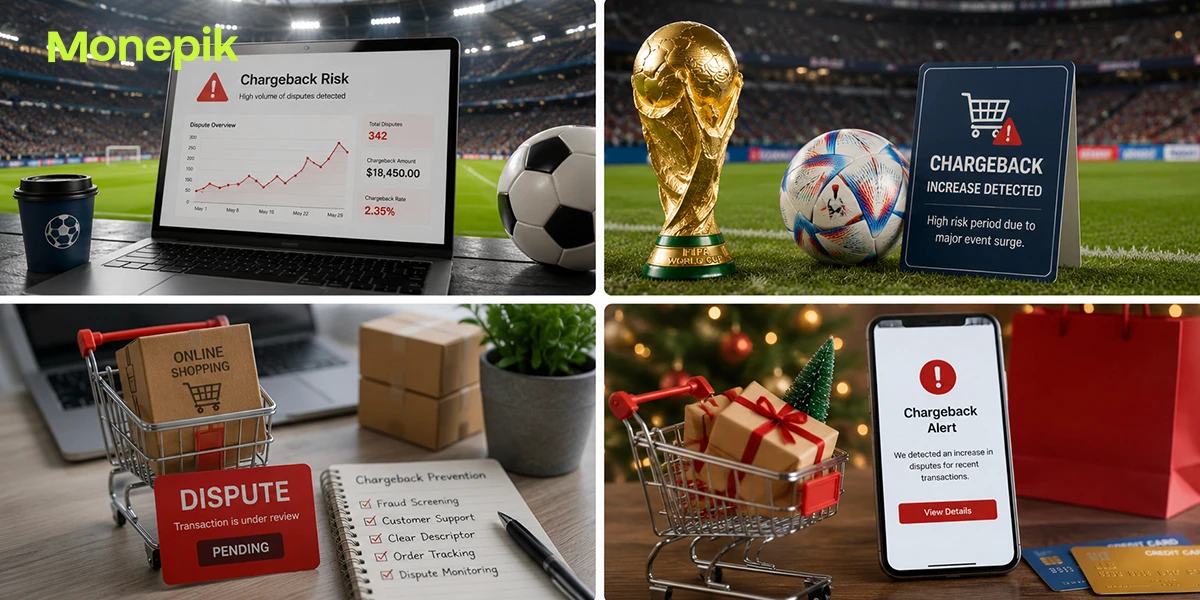
Chargebacks spike around the World Cup, holidays, and major events because transaction volume rises fast, fraud attempts increase, and more first-time buyers enter the checkout flow.
Fraudsters use these high-volume periods to hide risky transactions among legitimate orders. Weeks later, merchants often see the impact through disputes, refunds, friendly fraud, and higher chargeback ratios.
Every merchant who processes online payments notices the same pattern: transaction volume climbs during major global events and a few weeks later, so do chargebacks.
The World Cup, the Super Bowl, Black Friday, and the holiday shopping season all follow this cycle. It isn't a coincidence. It's a predictable, well-documented pattern in payment fraud, and understanding why it happens is the first step to protecting your business from it.
This guide breaks down the mechanics behind seasonal and event-driven chargeback spikes, which industries are most exposed, and what merchants can do before the next surge hits.
What Is a Chargeback Spike, and Why Does It Follow Big Events?
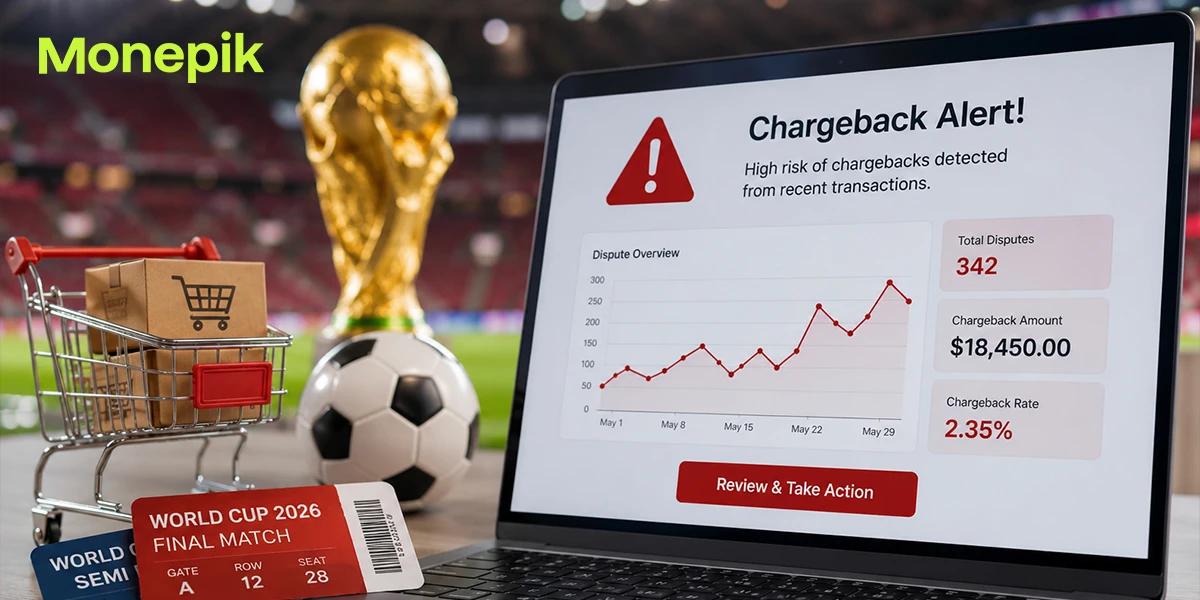
A chargeback spike is a short-term, sharp increase in the number of disputed transactions a merchant receives typically 30 to 90 days after a period of unusually high sales volume.
Chargebacks lag behind the transactions that cause them because cardholders usually need time to notice a fraudulent or disputed charge, and card networks build in windows of 60–120 days for filing a dispute.
Three forces combine to create these spikes:
1. Fraudsters exploit high-volume periods deliberately. Fraud rings specifically target moments when transaction volume is high and merchant fraud teams are stretched thin. A flood of legitimate orders makes it easier for fraudulent ones to slip through unnoticed; this is sometimes called "fraud camouflage."
Major sporting events like the World Cup are especially attractive targets because ticket sales, merchandise, and streaming subscriptions all spike at once, often on newly launched or lesser-tested checkout flows.
2. Consumer spending under time pressure leads to genuine disputes. Not every chargeback is fraud. During holiday shopping and major sales events, consumers buy more impulsively, forget purchases, or get frustrated with delayed shipping and dispute the charge instead of contacting the merchant first. This is known as "friendly fraud," and it rises sharply whenever purchase volume and urgency both increase.
3. New and first-time buyers increase risk exposure. Big events bring in customers who don't normally shop with a given merchant, people buying World Cup merchandise for the first time, or holiday shoppers trying an unfamiliar retailer for a one-off gift.
First-time buyers carry a statistically higher chargeback rate than repeat customers, simply because there's no purchase history to validate the transaction against.
Industries Most Exposed to Event-Driven Chargebacks
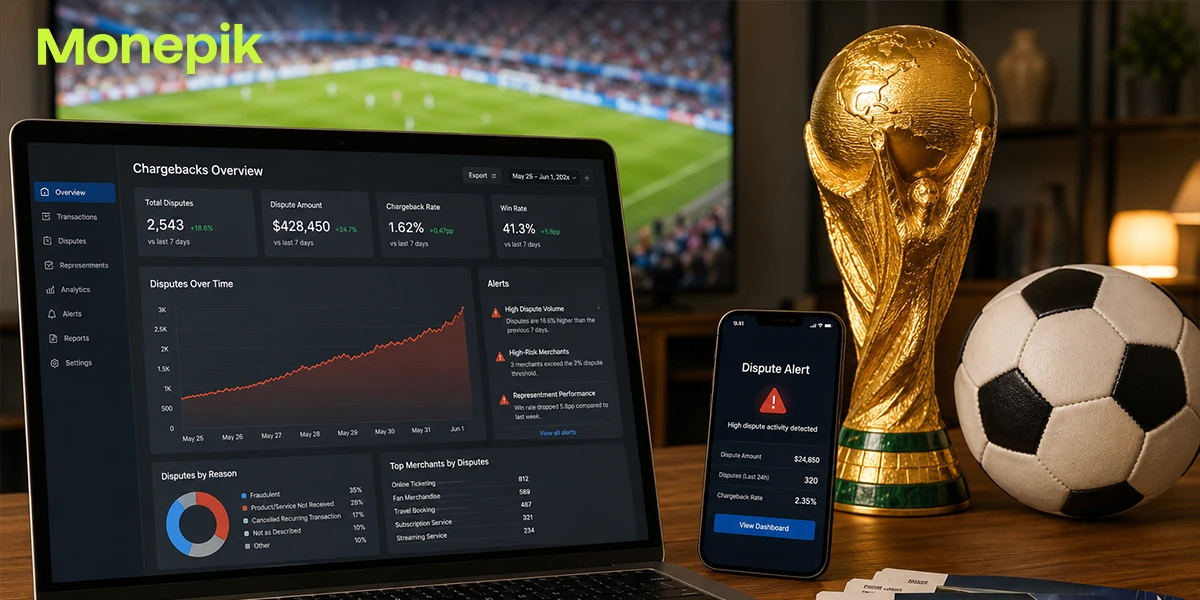
Some verticals see disproportionately larger spikes than others:
Ticketing and event merchandise- a natural target during tournaments like the World Cup, where demand vastly outpaces legitimate supply, driving buyers toward secondary and sometimes fraudulent resale sites.
E-commerce and apparel- holiday and Black Friday sales periods see the highest cart volumes of the year, and correspondingly the highest dispute volumes 60–90 days later.
Streaming and digital subscriptions- spikes during major tournaments as consumers sign up for short-term access and later dispute the charge once the event ends ("friendly fraud" via subscription disputes).
Travel and hospitality- booking surges around major events create high-value transactions that are attractive fraud targets and prone to cancellation-related disputes.
If your business operates in any of these categories, seasonal chargeback planning isn't optional; it's a core part of risk management.
The Real Cost of a Chargeback Spike
A chargeback isn't just a refunded transaction. Each dispute typically costs a merchant:
The original transaction amount
A chargeback fee from the acquirer or processor (commonly $15–$100 per dispute)
The cost of goods or services already delivered
Potential increases to future reserve requirements
Damage to the merchant's chargeback ratio which, if it crosses a processor's threshold, can trigger account review or termination
That last point is the one merchants underestimate most. A short-term seasonal spike can push a merchant's chargeback ratio above the threshold that card networks and processors monitor even if the underlying business is healthy. This is exactly why chargeback management needs to be proactive, not reactive.
How to Prepare for Seasonal and Event-Driven Chargeback Spikes

1. Tighten fraud screening before the surge, not during it. Fraud filters, velocity checks, and device fingerprinting should be reviewed and stress-tested ahead of any known high-volume period not adjusted after disputes start rolling in.
2. Make customer service and refund policies visible and easy to use. A large share of friendly fraud disputes happen simply because the customer didn't know how to request a refund and defaulted to their bank instead. Clear, accessible support channels reduce this significantly.
3. Use clear billing descriptors. An unrecognizable line on a bank statement is one of the most common reasons customers dispute a legitimate charge. Make sure your billing descriptor clearly matches your brand name.
4. Monitor your chargeback ratio in real time during high-volume periods. Don't wait for a monthly report. Merchants running through a seasonal surge should be checking dispute ratios weekly, at minimum, so early spikes can be addressed before they compound.
5. Know your processor's thresholds and review policies in advance. Every processor sets different chargeback thresholds, and different consequences for crossing them: a warning, a reserve increase, or in the worst case, account termination. This is exactly the kind of detail that should be clarified before you sign with a provider, not discovered during a crisis.
6. Build a reserve buffer into your seasonal cash flow planning. If your processor holds reserves against chargeback risk, expect that reserve to increase temporarily after a high-volume period. Planning for this in advance avoids a cash flow surprise.
The Bigger Picture: Chargeback Risk Is a Contract Risk
Seasonal chargeback spikes are predictable which means they're manageable, if you know your processor's specific policies ahead of time. The merchants who get blindsided aren't the ones who saw a chargeback spike; they're the ones who didn't know what their processor's thresholds, review triggers, and reserve policies actually were until it was too late.
This is exactly why understanding your payment provider's chargeback and reserve policies in detail before you sign, not after a dispute wave hits is one of the most overlooked parts of merchant risk management.
Stats and Real Industry Incidents
The risk around major events is not theoretical. Recent payment and fraud data shows how quickly fraud pressure increases when global demand rises.
ACI Worldwide found that in the build-up to Copa America 2024, card-not-present attempted fraud reached 4% of transaction value, around 3.6 times the 2023 baseline. The same analysis showed traditional card payments had a 3.97% attempted fraud rate, compared with only 0.57% for alternative payment methods.
Fraudulent orders also averaged $405, compared with $270 for legitimate orders, showing how fraudsters often target higher-value event purchases.
Holiday shopping creates the same pressure at a much larger scale. Adobe reported that U.S. consumers spent $257.8 billion online between November 1 and December 31, 2025, up 6.8% year over year.
Cyber Week alone generated $44.2 billion in online spend, while Cyber Monday reached $14.25 billion. When that much volume moves through online checkout in such a short window, even a small increase in fraud or refund disputes can create a serious chargeback spike.
Chargeback costs are also rising globally. Mastercard’s 2025 State of Chargebacks report forecasted that chargebacks could cost merchants $42 billion by 2028, with nearly half reported as fraudulent. Visa also notes that friendly fraud represents around 20% of fraudulent disputes globally, and up to 30% for high-volume online merchants.
The World Cup has already shown how event-related payment disputes can escalate. In July 2026, StubHub faced a Texas Attorney General investigation and a proposed class-action lawsuit after fans claimed World Cup tickets were cancelled, invalid, or never delivered.
Even when the root issue is ticket fulfillment rather than card fraud, the result is the same for merchants and platforms: angry customers, refund pressure, bank disputes, and higher reputational risk.
For e-commerce and retail merchants, the financial impact goes beyond the transaction itself. LexisNexis Risk Solutions reported that U.S. merchants lose an average of $4.61 for every $1 of fraud, once fees, operational costs, replacement goods, and customer friction are included. That is why a seasonal fraud spike should never be treated as a temporary customer service issue. It is a payment infrastructure risk.
Quick Answers
Why do chargebacks spike during major events?
Chargebacks rise because transaction volume increases, fraudsters hide inside the surge, and customers make faster, more emotional purchases that can later turn into disputes.
When do chargebacks appear after a major event?
Most chargebacks appear 30 to 90 days after the original transaction, although dispute windows can extend longer depending on the card network, issuer, and reason code.
Which events create the highest chargeback risk?
The World Cup, Super Bowl, Black Friday, Cyber Monday, Christmas shopping, New Year travel, major concerts, and large ticketed events all create higher dispute exposure.
Which industries are most affected?
Ticketing, event merchandise, e-commerce, apparel, streaming subscriptions, travel, hospitality, gaming, and digital goods usually see the biggest seasonal chargeback spikes.
Is every chargeback fraud?
No. Some chargebacks come from stolen cards, but many come from friendly fraud, descriptor confusion, refund frustration, delivery delays, or customers not recognizing the charge.
How can merchants reduce seasonal chargebacks?
Merchants should tighten fraud screening before the surge, use clear billing descriptors, monitor dispute ratios weekly, make refunds easy, and confirm processor thresholds before peak periods.
Frequently asked questions
Why do chargebacks increase after the World Cup?
What causes holiday chargeback spikes?
How long after Black Friday do chargebacks happen?
Which industries get the most chargebacks during major events?
How can merchants prevent seasonal fraud?
What is friendly fraud during holiday shopping?
Why do ticketing companies face more disputes during global events?
How do billing descriptors reduce chargebacks?
What should merchants check with their payment processor before peak season?
How can high-risk merchants prepare for seasonal transaction spikes?
Have questions about your chargeback exposure or reserve policy? Talk to Monepik experts about building a payment setup that holds up during your highest-volume periods.
Ready to Scale Global Payments?
Build reliable payment infrastructure for global markets. Manage, expand, and optimize your payments.