Nutraceutical Merchant Account in 2026 - Requirements & Fees
Learn how nutraceutical merchant accounts work, including requirements, fees, payment gateways, processing options and approval considerations.
What Is a Nutraceutical Merchant Account?
A nutraceutical merchant account allows a business selling supplements, vitamins, wellness products and similar products to accept card and online payments.
Although the payment flow is similar to standard ecommerce, nutraceutical businesses can face more detailed underwriting.
Payment providers may review:
Products and ingredients
Marketing claims
Customer locations
Monthly processing volume
Chargeback history
Subscription models
Refund policies
Fulfilment times
Because of these factors, some businesses may require a high-risk nutraceutical merchant account rather than a standard ecommerce setup.
The important point is that not every nutraceutical business has the same risk profile.
A supplement retailer with clear product information and low chargebacks may be viewed very differently from a business using aggressive marketing, recurring subscriptions or complex cross-border fulfilment.
Are Nutraceutical Businesses Considered High Risk?

Some payment providers classify nutraceutical businesses as higher risk because of the potential for disputes, regulatory concerns and product-related underwriting.
Common risk factors include:
Product Type
Certain supplements, ingredients or product categories may fall outside a provider's risk appetite.
Marketing Claims
Providers may review how products are promoted.
Claims that appear misleading, exaggerated or difficult to substantiate can make approval more difficult.
Recurring Billing
Subscription models can increase disputes when customers do not fully understand renewal terms or find cancellation difficult.
Chargebacks
High refund and chargeback levels can affect both approval and long-term account stability.
Cross-Border Sales
Businesses selling into multiple countries can face additional underwriting because products, regulations and payment rules vary between markets.
This is why finding the right nutraceutical merchant account payment processor depends on the actual business model rather than simply the industry name.
What Are the Requirements for a Nutraceutical Merchant Account?

Requirements vary between acquirers and payment providers, but most merchants should expect a proper underwriting process.
Providers may request:
Corporate Documents
Certificate of incorporation
Company registration details
Director and shareholder information
Business address
KYC Information
Identification and address verification may be required for directors, shareholders and beneficial owners.
Processing History
Established merchants may need to provide recent processing statements showing:
Monthly volume
Average transaction value
Refunds
Chargebacks
Processing currencies
Product Information
The provider may ask for:
Product catalogue
Ingredient information
Product labels
Manufacturer information
Relevant certificates or supporting documentation
Website Information
A complete website can make underwriting easier.
Important pages normally include:
Terms and conditions
Privacy policy
Refund policy
Delivery policy
Contact information
Subscription terms where applicable
Incomplete or unclear information can delay a supplement merchant account application.
Nutraceutical Merchant Account Processing Options
The best structure depends on where the business operates, who its customers are and how it accepts payments.
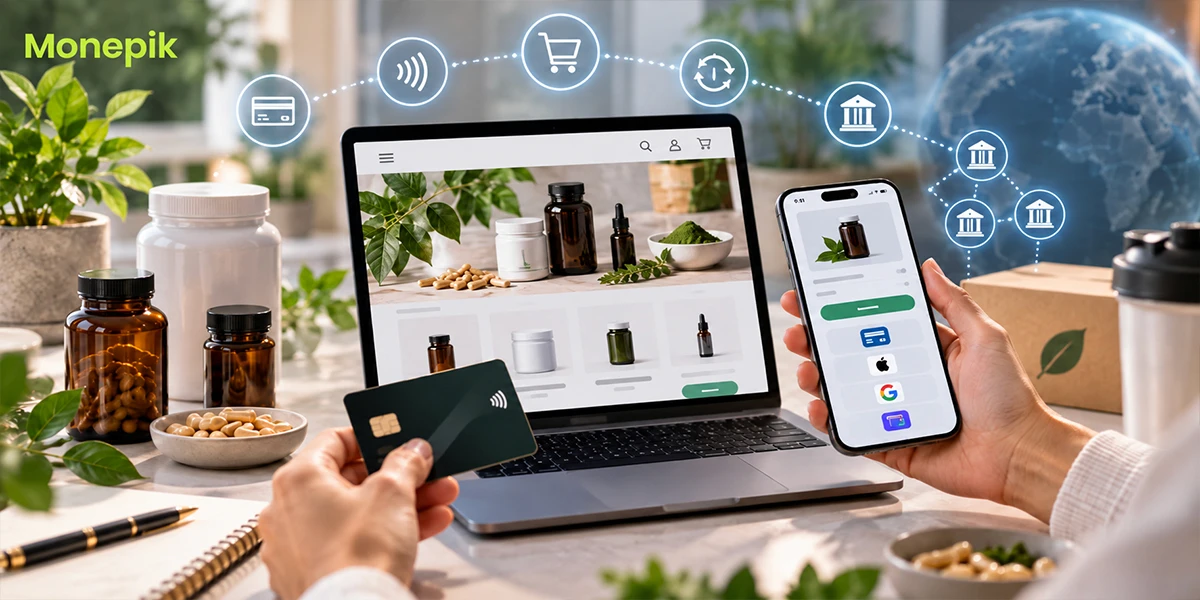
Card Processing
Nutraceutical credit card processing allows eligible merchants to accept card payments online.
When comparing options, merchants should review:
Supported countries
Processing currencies
Settlement currencies
Settlement periods
Transaction limits
Chargeback fees
Reserve requirements
Looking only at the headline processing rate can be misleading.
The full commercial structure matters.
Recurring Payments
Subscription-based supplement businesses need processing that supports recurring billing.
Merchants should clearly communicate:
Initial payment
Renewal amount
Billing frequency
Cancellation process
Refund terms
Clear subscription terms can help reduce customer disputes.
Multi-Acquirer Processing
Larger or growing merchants may use more than one acquiring relationship.
For example:
Acquirer A → Primary Market
Acquirer B → Secondary Market
Acquirer C → Additional Processing Route
A multi-acquirer structure can provide more flexibility and reduce reliance on a single provider.
Alternative Payment Methods
Depending on the market, businesses may also consider:
Open banking
Bank payments
Digital wallets
Local payment methods
This can give customers more ways to pay and reduce total dependency on cards.
Does a Nutraceutical Merchant Account Need a Payment Gateway?
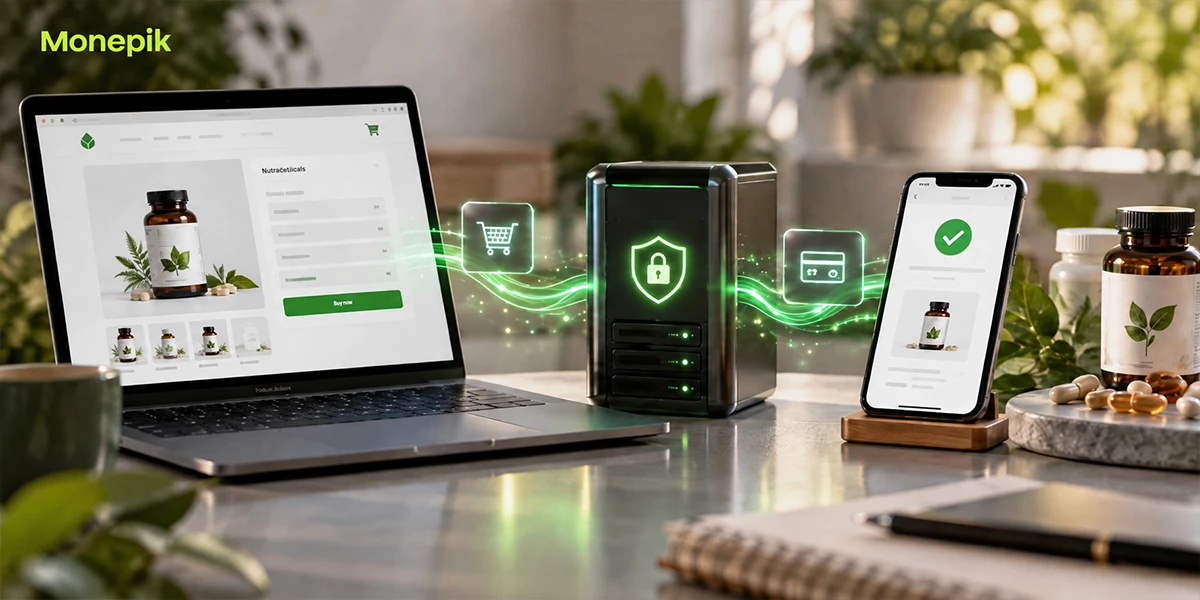
For ecommerce businesses, normally yes.
A nutraceutical merchant account payment gateway connects the merchant's checkout with the payment infrastructure used to process the transaction.
The payment flow typically looks like:
Customer → Checkout → Payment Gateway → Acquirer → Card Network → Issuing Bank
A gateway may also support:
Tokenisation
3D Secure
Fraud controls
Recurring payments
Transaction reporting
Multiple currencies
Payment routing
The gateway and acquiring setup therefore need to work together.
How Much Does Nutraceutical Payment Processing Cost?

There is no fixed rate for nutraceutical merchant account payment processing.
Pricing depends on factors such as:
Monthly volume
Average transaction size
Business location
Customer markets
Product category
Chargeback history
Processing history
Subscription model
Settlement requirements
Costs may include:
Transaction fees
Gateway fees
Chargeback fees
Refund fees
Monthly fees
Rolling reserves
A rolling reserve means the provider temporarily holds a percentage of processing volume to cover potential future liabilities.
For higher-risk businesses, settlement terms and reserves can be just as important as the transaction rate.
Why Can a Nutraceutical Merchant Account Be Declined?
A declined application does not always mean the business cannot obtain processing elsewhere.
It can simply mean the merchant does not match that provider's underwriting criteria.
Common reasons include:
Unsupported products
Unclear product information
Aggressive marketing claims
High historical chargebacks
Missing documentation
Unclear subscription terms
Unsupported countries
Weak website policies
Unrealistic expected processing volumes
Before applying again, the merchant should understand why the previous application was rejected.
Repeatedly sending the same application to unsuitable providers can waste time.
How Can Nutraceutical Businesses Reduce Payment Issues?
Approval is only the beginning.
Merchants also need to maintain a healthy processing profile.
Be Transparent
Tell the provider exactly what products are being sold, where customers are located and how the business operates.
Keep Billing Clear
Customers should understand what they are paying for and recognise the billing descriptor on their statement.
Make Cancellations Simple
Businesses using subscriptions should make renewal and cancellation terms easy to understand.
Monitor Chargebacks
Track why disputes happen and identify patterns by product, country, marketing channel or billing model.
Use Appropriate Fraud Controls
Fraud tools may include:
3D Secure
Transaction monitoring
Velocity checks
Geographic controls
Manual review
The objective is to reduce fraud without unnecessarily blocking legitimate customers.
How Monepik Helps Nutraceutical Merchants
Finding the right nutraceutical merchant account processing options can be difficult when different providers have different risk appetites.
Monepik works as a payments consultancy and introducer.
We do not act as the payment processor or acquirer.
Instead, we help merchants identify suitable payment providers based on factors such as:
Product type
Monthly processing volume
Target markets
Processing history
Chargebacks
Required currencies
Settlement needs
Subscription model
Depending on eligibility, solutions can include:
Card Processing
Acquiring options for eligible nutraceutical and supplement merchants.
Multi-Acquirer Infrastructure
Additional acquiring routes for businesses requiring more than one processing relationship.
Banking
Business banking and account solutions depending on the merchant's jurisdiction and profile.
Open Banking
Account-to-account payment options in supported markets.
The goal is not simply to find a provider that says it supports nutraceuticals.
It is to find a provider that fits the specific business.
Choosing the Right Nutraceutical Payment Setup
A reliable nutraceutical ecommerce payment processing setup should match the merchant's actual operating model.
Before selecting a provider, consider:
Does it support your product category?
Does it support your target markets?
Which currencies can you process?
What are the settlement terms?
Is a rolling reserve required?
Does it support recurring payments?
What gateway is available?
Are there volume limits?
For nutraceutical merchants, payment processing should be treated as infrastructure rather than simply another ecommerce tool.
The stronger the match between the merchant, provider and payment setup, the better the foundation for long-term processing.
If you are looking for a nutraceutical merchant account, supplement payment processing or additional acquiring options, speak with Monepik about the routes available for your business.
Telegram: @monepik
Frequently Asked Questions
What is a nutraceutical merchant account?
It is a merchant account that allows eligible nutraceutical and supplement businesses to accept electronic payments.
How do I get a nutraceutical merchant account?
You normally submit company, ownership, website, product and processing information to an acquirer or payment provider for underwriting.
Are nutraceutical businesses considered high risk?
Some are. Risk classification depends on the products, markets, marketing, billing model, processing history and chargeback levels.
What documents are needed?
Common requirements include company documents, KYC information, bank details, processing statements and product information.
How much does nutraceutical payment processing cost?
Costs depend on the merchant's risk profile, volume, markets, currencies and processing history. Higher-risk setups may also include rolling reserves.
Can supplement companies get a merchant account?
Yes. Supplement companies can obtain merchant accounts where their products and business model fit the provider's underwriting criteria.
Do nutraceutical businesses need a payment gateway?
Online merchants normally need a payment gateway to connect their ecommerce checkout with the acquiring and payment infrastructure.
What can cause an application to be declined?
Common reasons include unsupported products, missing documents, excessive chargebacks, unclear marketing, unsupported jurisdictions and incomplete website policies.
Ready to Scale Global Payments?
Build reliable payment infrastructure for global markets. Manage, expand, and optimize your payments.