CASP License in Lithuania - Requirements, Costs, & Timelines
A practical guide to CASP authorisation in Lithuania covering capital by class, Bank of Lithuania timelines, local substance and post licence banking.

Lithuania has become one of the most active jurisdictions in the EU for crypto asset service providers preparing for MiCA.
Lithuania registered more than 370 crypto businesses under the old VASP regime. Six hold a MiCA CASP authorization today.
That gap is the whole story, and almost nobody writing about Lithuanian crypto licensing will tell you about it.
The short answer: a CASP authorization from the Bank of Lithuania takes roughly 65 to 85 working days of statutory review, six to twelve months in practice, and 50,000 to 150,000 euro in regulatory capital depending on which services you offer. The state application fee is around 2,300 euro, which is the smallest number in the whole exercise. The transitional period for existing VASPs closed on 1 January 2026, so there is no grandfathering left to rely on.
This guide covers what the Bank of Lithuania actually asks for, what the process costs, why the approval rate has been so low, and the problem that authorization does not solve.
What Is a CASP License and What Does It Let You Do?
A CASP license is an authorization under the EU's Markets in Crypto-Assets Regulation to provide crypto-asset services in the European Union. It replaced the national VASP registrations that member states ran before MiCA.
One authorization covers all 27 member states through passporting, so a Lithuanian CASP can serve customers in Germany or Spain without reapplying.
MiCA defines ten crypto-asset services. Which ones you apply for determines your capital floor and the depth of the review.
MiCA class | Services covered | Minimum own funds |
|---|---|---|
Class 1 | Reception and transmission of orders, execution of orders, placing, advice, portfolio management, transfer services | 50,000 euro |
Class 2 | Everything in Class 1, plus custody and administration, and exchange of crypto for funds or for other crypto | 125,000 euro |
Class 3 | Everything in Class 2, plus operating a trading platform | 150,000 euro |
Two things about that table get missed.
The capital figure is a floor, not a target. Own funds must be the higher of the class minimum or one quarter of the previous year's fixed overheads. A Class 1 firm with 800,000 euro of annual running costs holds 200,000 euro, not 50,000. Most licensing pages quote the floor and stop there.
And the class is set by the services, not by ambition. Adding a single exchange function moves a Class 1 applicant to Class 2 and changes the entire prudential file.
Why Lithuania for CASP Authorization?
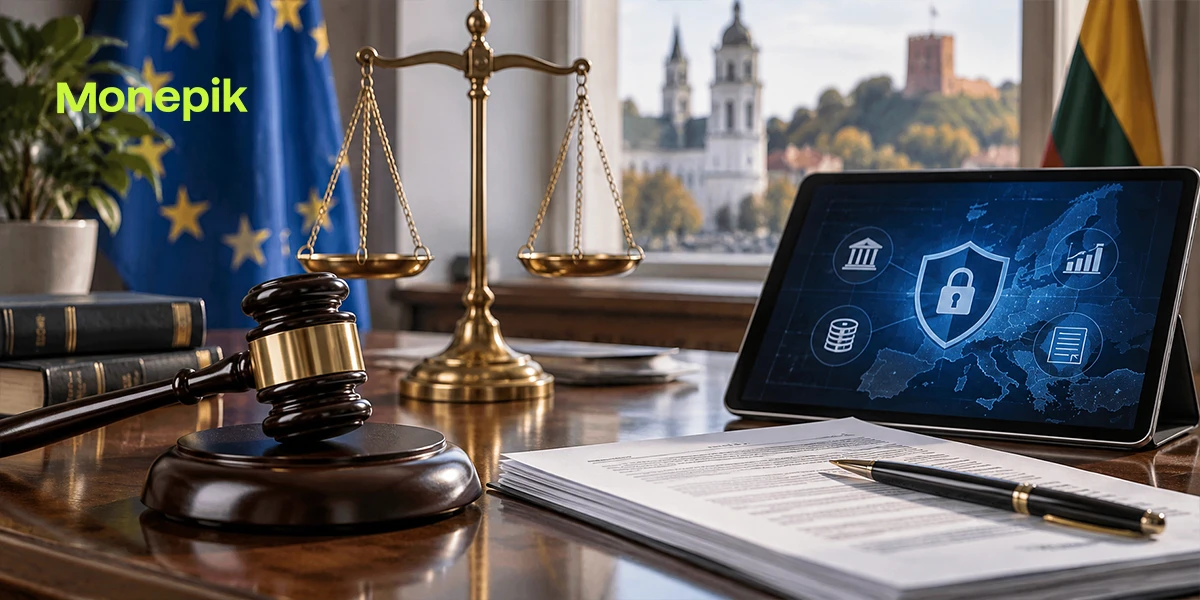
Lithuania has positioned itself as a fast, business-friendly gateway for CASP licensing, for a few reasons:
Established regulator experience: the Bank of Lithuania has years of experience supervising VASPs and has carried that infrastructure into MiCA supervision.
EU passporting: once authorized, a Lithuanian CASP can passport its services across all EU/EEA member states, without re-applying jurisdiction by jurisdiction.
Reasonable timelines and costs compared to some other EU hubs, making it attractive for both startups and scaling exchanges.
This combination is why searches for a Lithuania cryptocurrency license and a crypto asset service provider Lithuania pathway have grown among founders comparing EU jurisdictions.
What's Required to Get a CASP Authorization in Lithuania?

Broadly, applicants need to demonstrate:
A registered legal entity with a genuine presence in Lithuania
Fit-and-proper management and beneficial owners
A robust AML/CFT framework, including transaction monitoring and Travel Rule compliance
Adequate capital requirements based on the services offered
Governance, risk management, and IT security policies that meet MiCA standards
A clear operational plan showing how the business will actually run day to day
On paper, that looks like a checklist. In practice, it's where most applications either stall or get rejected, not because the business model is flawed, but because the compliance documentation doesn't hold up to regulator scrutiny.
The Real Bottleneck: Compliance, Not Ambition

Most businesses pursuing a CASP license in Lithuania aren't short on ambition. They're short on the right compliance guidance to get the application right the first time.
AML policy drafting, capital structuring, governance documentation, and ongoing regulatory liaison all require specialist expertise that most crypto teams don't have in-house.
This is where Monepik's compliance partner network comes in. Rather than businesses navigating MiCA CASP licensing alone, Monepik connects applicants with experienced compliance partners who handle the authorization process end-to-end, from initial gap analysis through to submission and regulator engagement.
After Licensing: The Technology Question

Getting authorized is only half the equation. Once a business holds (or is working toward) a CASP authorization in Lithuania, it still needs a platform capable of running regulated crypto operations: trading engine, custody, onboarding, transaction monitoring, all built to standards that satisfy an EU regulator.
Building that in-house is slow and expensive. That's why Monepik also connects licensed and licensing CASPs with a technology partner offering a ready-to-use platform built specifically for regulated crypto and money-service operations, so businesses can focus on scaling instead of engineering infrastructure from scratch.
How Monepik Helps
For businesses working toward a crypto business license in Lithuania, Monepik acts as the connector on both fronts:
Compliance: introductions to partners who manage the CASP application process, AML frameworks, and ongoing regulatory obligations
Technology: access to a ready-to-use platform through our technology partner, purpose-built for regulated crypto and MSB operations
Whether you're just starting to explore a MiCA license in Lithuania or you're licensed and need the infrastructure to operate, Monepik connects you with the right partner for each stage.
Frequently Asked Questions
How long does it take to get a CASP license in Lithuania?
Timelines vary by business model and how complete the application is, but well-prepared applications with strong compliance documentation typically move through the Bank of Lithuania's review faster than those submitted with gaps. Working with an experienced compliance partner from the start is the biggest factor in avoiding delays.
What's the difference between a CASP license and the old VASP registration?
VASP registration was a lighter-touch national regime. A CASP license under MiCA is a full authorization with stricter capital, governance, and AML requirements, but it comes with EU-wide passporting, which VASP registration didn't offer.
Can a Lithuanian CASP license operate in other EU countries?
Yes. Once authorized in Lithuania, a CASP can passport its services to any other EU/EEA member state without needing separate national licenses.
Do I need a physical office in Lithuania to apply?
Yes, a genuine local presence is a core requirement. Regulators expect more than a registered address on paper. The specifics depend on the scale and nature of the services offered, which a compliance partner can assess for your business.
What types of businesses need a CASP authorization?
Any business offering regulated crypto-asset services in the EU, including exchanges, custody providers, trading platforms, portfolio managers, and advisory services, falls under MiCA's CASP licensing requirement.
Do I need a license before I can use a ready-to-use technology platform?
No. Businesses can access technology infrastructure through Monepik's technology partner while their CASP authorization in Lithuania is in progress, so the platform and the license track can move in parallel rather than waiting on each other.
How does Monepik help with the CASP licensing process?
Monepik connects applicants with experienced compliance partners for the authorization process itself, and with a technology partner for the platform infrastructure needed to operate once licensed, so businesses don't have to source each piece separately.
Looking to obtain a CASP license in Lithuania, or need the technology to run one? Comment "CASP" or "PLATFORM" below, or reach out via monepik.com, WhatsApp, or Telegram, and we'll connect you with the right team.
Ready to Scale Global Payments?
Build reliable payment infrastructure for global markets. Manage, expand, and optimize your payments.